
BJJ training
How to use BJJ coaching notes from film study
Treat coaching notes as a shortlist of priorities for the next session — not a verdict on your entire game. Keep one defensive theme and one offensive theme, then train those on purpose.
What coaching notes are for
Notes from film study (your own writing, a coach’s feedback, or AI-assisted analysis) should answer: “What should I practise next?” They are not a substitute for live instruction, and they can be wrong when footage is unclear. Use them as hypotheses to test on the mat.
Filter noise before you drill
- Ignore one-offs — a single mistimed attempt is less important than a pattern.
- Label technical vs decision mistakes — mechanics vs choices (analysis method).
- Pick at most two themes — more than that usually means you will practise none.
Turn a note into a next-class plan
For each priority, write:
- The position it starts from.
- What you will try (a grip, frame, escape path, or pass detail).
- How you will get reps — positional rounds, drilling, or a constrained game.
Example: “When they stand in my closed guard, keep both feet connected longer before shooting a sweep” is trainable. “Get better at guard” is not.
Using AI-generated notes responsibly
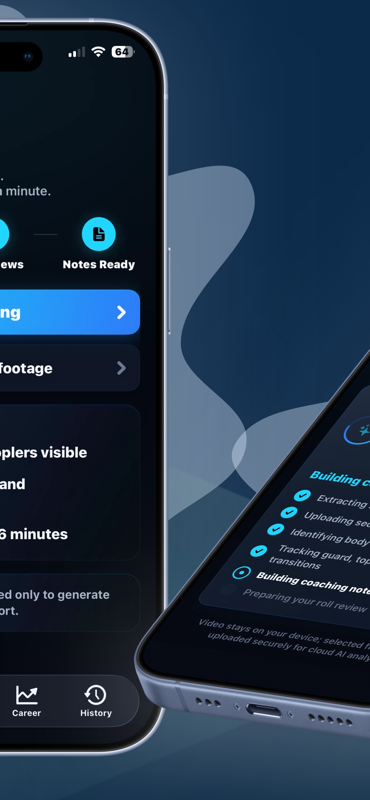
Apps like BJJ Vision AI can surface positional context and coaching-style priorities from uploaded sparring footage. Treat outputs as assistance: video quality, angle and lighting affect what can be identified. Confirm important conclusions with your coach when possible. AI does not replace a qualified instructor or medical advice.
Learn more about how analysis works and footage privacy.
Close the loop
After the next session, check whether the priority showed up. Log it in a training journal. If the same note returns for weeks, ask your coach for a different approach — you may be practising the wrong layer of the problem.
Key takeaways
- Notes exist to create next-session actions.
- Cap priorities; discard one-off noise.
- Make each priority position-specific and drillable.
- Treat AI notes as hypotheses, not final truth.
Prefer structured roll analysis?
BJJ Vision AI analyses uploaded sparring footage into positions, transitions and coaching priorities — as a training aid, not a coach replacement.